


Is Mental Health Still Important?
- Cloey Kinney
- Oct 13, 2025
- 4 min read
The answer: yes, but kind of.
The 18th century had a special diagnosis for women with anxiety, libido or lack of, hysteria, impulsivity, or even 'being a trouble.' Classified as 'female hysteria,' treatment was often an orgasm courtesy of ones healthcare provider. More serious cases sent women to treatment facilities or into surgery. Doctors believed that removing a woman's ovaries would correct unruly behaviour. In this time, medical professionals did not care about someone's growth. Results were best, no matter how it had to be achieved. These cases of hysteria were often a woman simply existing. Imagine if 19th century doctors peeked into 2025 and saw independent women who ran for office and held accounts or lives that didn't have to revolve around a man's permission... Odds are, we'd likely all be undergoing hysterectomies at their hand. In fact, people have been blaming the uterus for a woman's emotions since 1900 BC.

Although the official diagnosis rate of mental illnesses is lower in men than women, I find there to be societal factors that call for this number to be inaccurate. The very knowledge that male suicide is more common than female should speak to you. Numbers may tell us that more females approach medical professionals for help, but more men are dying. Society has hardened men with generation stigma. Growing up, my friend punched holes in walls, got into fights, dabbled in drugs. Adults explained his issues away with a wave and dismissive, "men," as if it were both diagnosis and symptom. Now that I'm older, I know that acting out isn't a stage of puberty. Somebody should have sat him down, helped regulate his emotions, asked if there were things on his mental plate that he didn't know how to digest. Instead, we brushed him off. Regardless of gender, nobody should be acting with such extreme anger or sadness. 'Middle ground' looks different for us all, but without proper support or regulation, you won't find it.
I used to sit in my room all day, locked in a book, unwilling to hold conversation. They asked, 'what's wrong with you?' instead of 'can I help with anything?' Because I wasn't productive, someone saw the warning signs. That same friend could do the dishes, hold conversation, go to work. Because he did as he was told, nobody bat an eye at his illegal extracurriculars or tendency to scream more than he spoke. Furthermore, stigma prevented him from owning up to his emotions. He thought he could handle it, that a therapist would only tell him to 'stop being emotional' or 'get over it.' When I asked if he would think different if he weren't a man, his answer was short—yes. He said that if somebody had shown a fragment of consideration, his regulation would be stronger. When I poked further, he said because everybody constantly shoved his emotions away, anything other than his current life was unimaginable. Instead of taking his anger out on the world, he hurt himself. Surrounded by people who said he needed to improve, he felt guilty for his anger, and that guilt drove him to self harm.
History has dismissed women for normal behaviour because it didn't align with their doll-like idea of what they should be. Natural body hair, emotions, the drive to be independent. It has also silenced men, forcing them to harden, forcing them into stoic characters. Provide, show up, be a rock for loved ones. There's no emotion you can't simply 'get over.' Despite articles, campaigns, mental health weeks and months; society is still struggling to provide the proper resources to those suffering.
Mental Health Matters; both a statement and campaign. Through the province of New Brunswick, I'll be putting together various types of media. Short informative videos, documentary style, and more. I understand the struggle to receive help, because I was failed by this province for over a decade. Medical records had more notes about my appearance than what I was telling them. I've been sent home from suicide attempts with pills and hotlines.
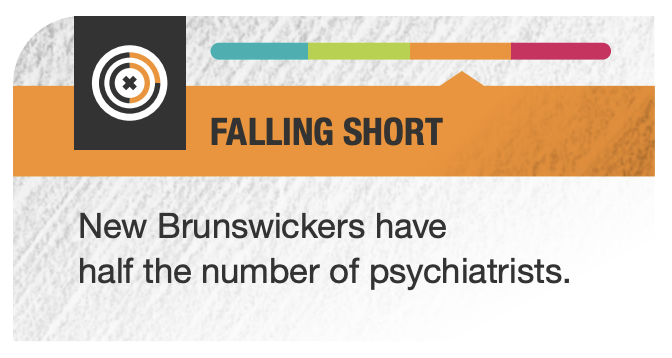
Even trying to get a therapist is unachievable. Most require a recommendation from your primary care provider. After a lack of funding despite years of service in the community, mine has retired. The government assures us that they care; then they deny a reliable doctor funding, removing hundreds of patients from their primary provider. Without a PCP recommendation, any psychiatric waitlist exceeds a year. With many resources being cut, I fail to see where the replacements are. New Brunswick has half the national average of psychiatrist to patient ratio, sitting at 6.6/100,000 in comparison to 13.1/100,000. Instead of focusing on opening more clinics to address youth and adult mental illness, there were talks in 2024 about passing legislature on involuntary rehab for some with addiction. Research shows that involuntary admission is more likely to produce harmful results, with unlikely long-term recovery.
The goal of this project is to help shine a light on real people and their stories. With creative works written during my time at Toronto Film School, originally intended for large mental health companies. However, despite progressing with multiple agents, nobody wanted to use real people. I cared too much about this project and the motivation behind it to give up. On a budget funded by my personal credit card, I'll be producing various works over the next year. Whether you'd like to support by following my social media, donating, or more. Mental health has been a raging topic for centuries. We live in too much of a progressive time for critical resources to be cut. Emergency rooms are overwhelmed, hotlines are being cut, and doctors are fleeing the province. Mental Health Matters... Let's prove it.


Comments